On June 25, 2026, Professor Kelly Sims Gallagher, Dean of The Fletcher School of Law and Diplomacy at Tufts University, visited the School of Public Policy and Management at Tsinghua University (Tsinghua SPPM). During the visit, Dean Gallagher and Xufeng Zhu, Dean of Tsinghua SPPM, signed a Memorandum of Understanding (MOU) on behalf of their respective institutions, making a significant step forward in bilateral academic cooperation.
The MOU aims to deepen collaboration between the two institutions in faculty and student exchanges, talent development, and scholarly discussions. The signing ceremony was also attended by Wei Zhong, Associate Dean of Tsinghua SPPM, and Associate Professor Fang Zhang.
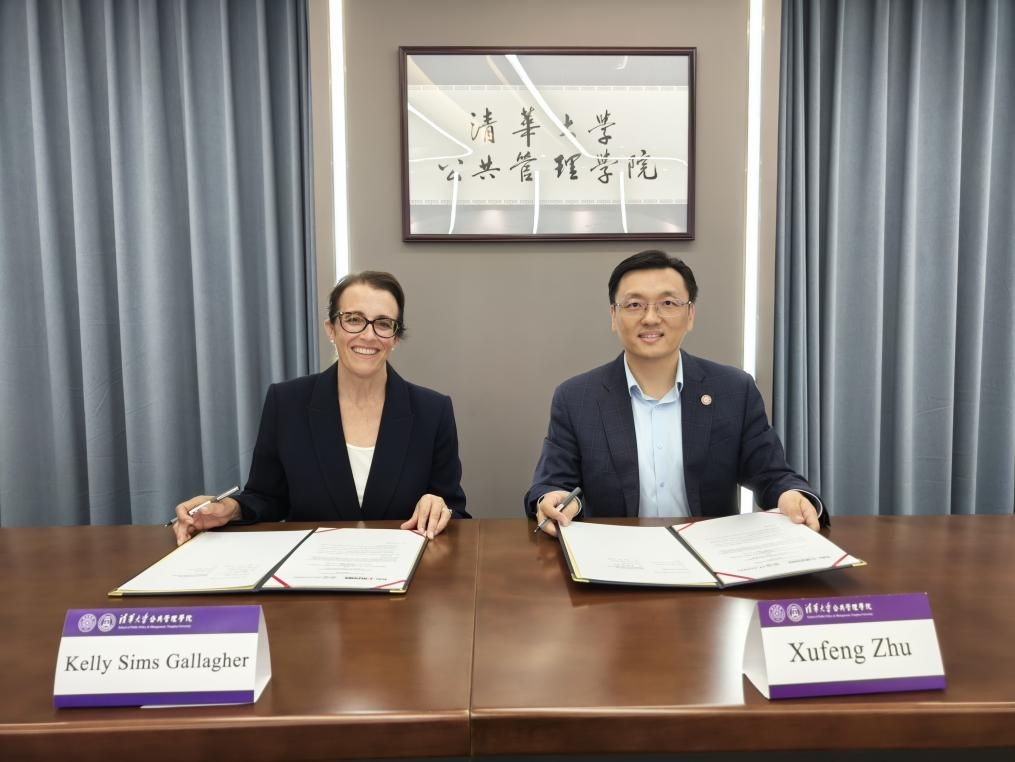
Signing Ceremony (Left: Kelly Sims Gallagher, Right: Xufeng Zhu)
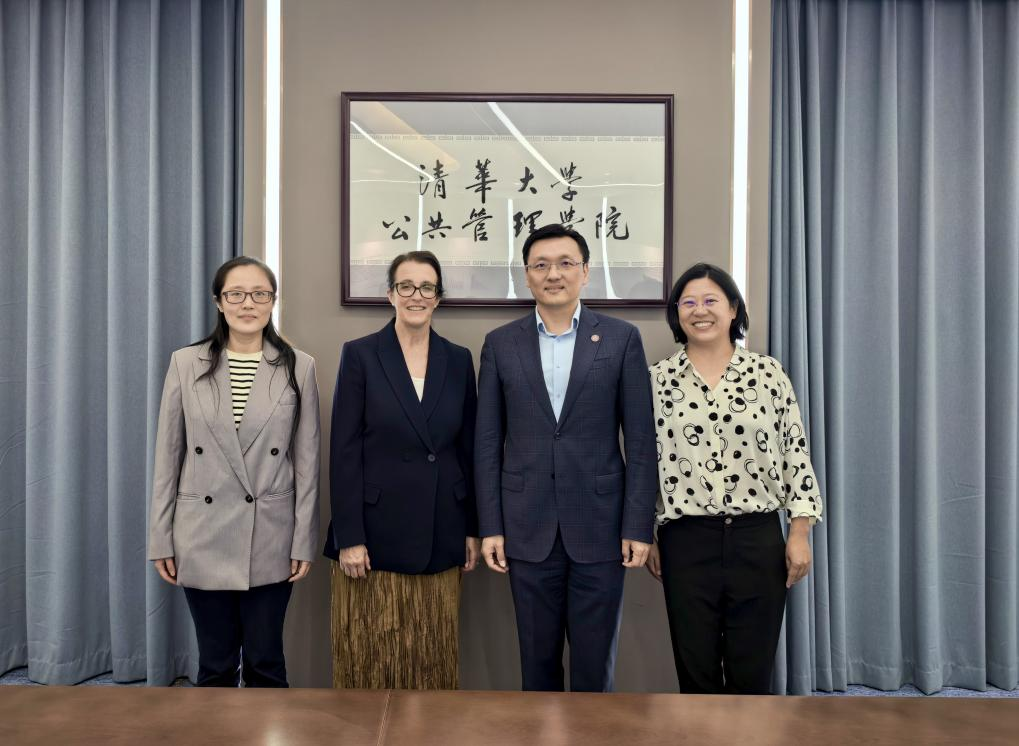
Group Photo (from left to right: Wei Zhong, Kelly Sims Gallagher, Xufeng Zhu, Fang Zhang)
Following the ceremony, Tsinghua SPPM hosted its 177th “Mingde Forum”. Deans Gallagher and Zhu engaged in an inspiring fireside chat titled “Building Resilient Prosperity: U.S.-China Dynamics, Green Industrialization, and Climate Policy.” The session was moderated by Associate Professor Fang Zhang and drew active participation from faculty and students across the university.
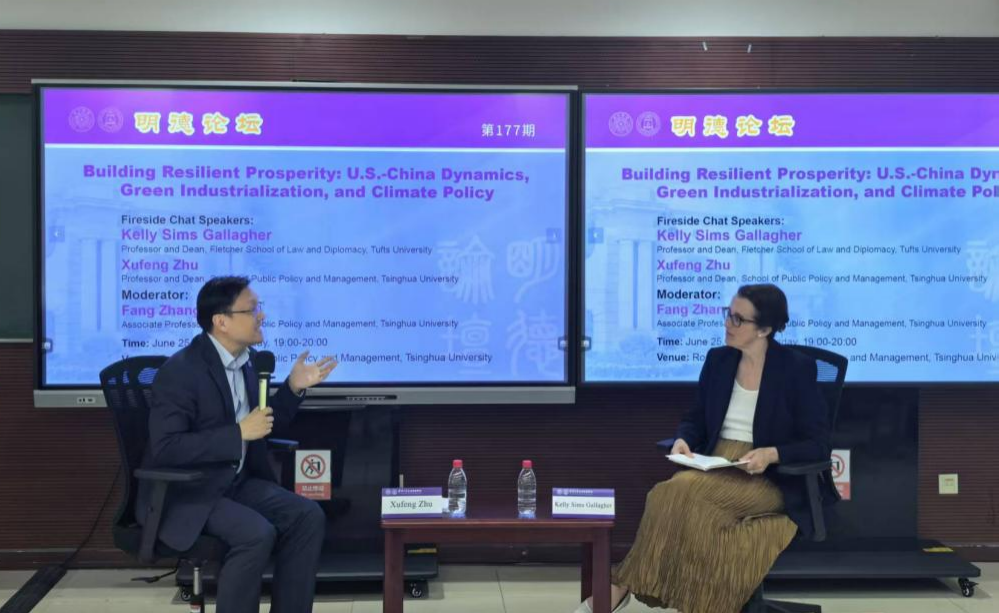
Deans’ Fireside Chat
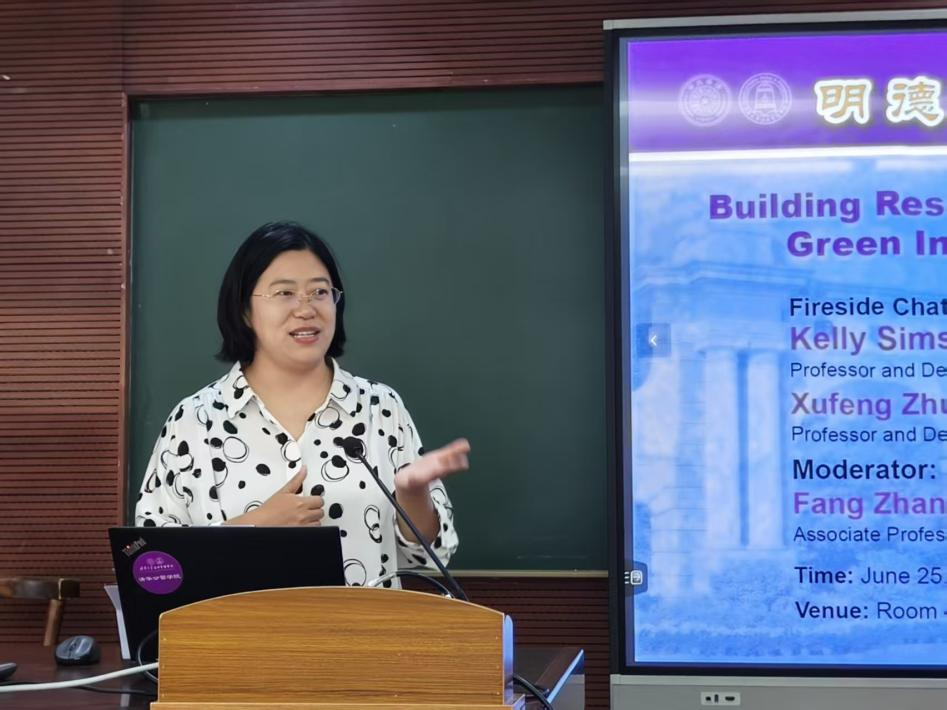
Fang Zhang Moderating the Session
The dialogue opened with an analysis of the institutional resilience of climate policy. Dean Gallagher pointed out that the predictability of U.S. climate policy has declined due to growing partisan polarization, which has turned modest policy adjustments between presidential administrations into extreme swings that injects uncertainty into green investments. However, she emphasized that market forces are partially offsetting this political risk. Citing 2026 data from the U.S. Energy Information Administration, she noted that renewable energy paired with energy storage accounts for 93% of all planned new electricity capacity additions this year, with natural gas making up merely 7%. Because most of these clean energy installations are concentrated in traditional fossil fuel-producing states such as Texas, Gallagher observed that the cost competitiveness of clean energy has become undeniable as the market is making its choice.
Responding from an institutional perspective, Dean Zhu highlighted how China’s Five-Year Plans provide stable medium-to-long-term guidance and structural constraints for local governance. The central government ensures policy coherence by conducting unified performance evaluations at the end of each planning cycle. Furthermore, Dean Zhu explained that China has integrated energy security, air pollution governance, and carbon reduction targets into a single, cohesive strategic framework, thereby creating a highly synergistic, multi-objective policy system.
The conversation then turned to the evolution of U.S.-China climate diplomacy. Dean Gallagher recalled how the 2014 U.S.-China Joint Announcement on Climate Change laid the crucial groundwork for the Paris Agreement. She argued that despite a drastically shifted geopolitical landscapes, both nations must sustain coordination under multilateral frameworks including the UN Framework Convention on Climate Change (UNFCCC). She predicted that climate issues will increasingly be embedded directly into broader trade, investment, and security negotiations. Dean Zhu expanded on this by distinguishing between “climate negotiations” and “climate diplomacy”, observing that multilateral platforms like the G7 and G20 will become arenas where climate and economic-trade issues intersect.
On the green industrialization and trade paradox, the deans discussed supply chain security and industrial policy. Dean Gallagher acknowledged China’s dominant global manufacturing position across solar, wind, and energy storage sectors. While she anticipated that more countries might seek supply chain diversification through localization requirements or increased tariffs, she noted a compelling paradox: this heightened industrial competition could ultimately drive down clean technology costs globally. Dean Zhu analyzed the situation through the global division of labor, observing that slowing consumption demand in developed economies following the 2008 financial crisis has reshaped global supply-demand balances, which has accelerated modern industrial rivalries.
During the subsequent Q&A session, faculty and students engaged the speakers on topics including China’s green influence in the Global South and the divergent approaches of both nations toward supporting energy transitions in developing economies.
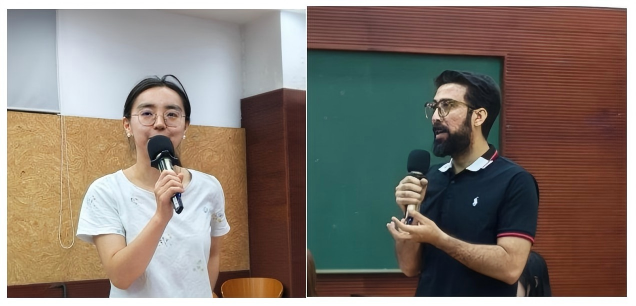
Q&A Session
In her closing remarks, Associate Professor Fang Zhang underscored that academic exchange between the United States and China is more vital than ever amid mounting international uncertainties. She magnified the unique role of scholarly dialogue in bridging distinct perspectives, reducing misperceptions, and identifying innovative avenues for future collaboration.
The dialogue concluded to warm applause, marking a new milestone for bilateral cooperation as both schools commit to leveraging academic platforms to forge consensus on frontier issues in global governance.
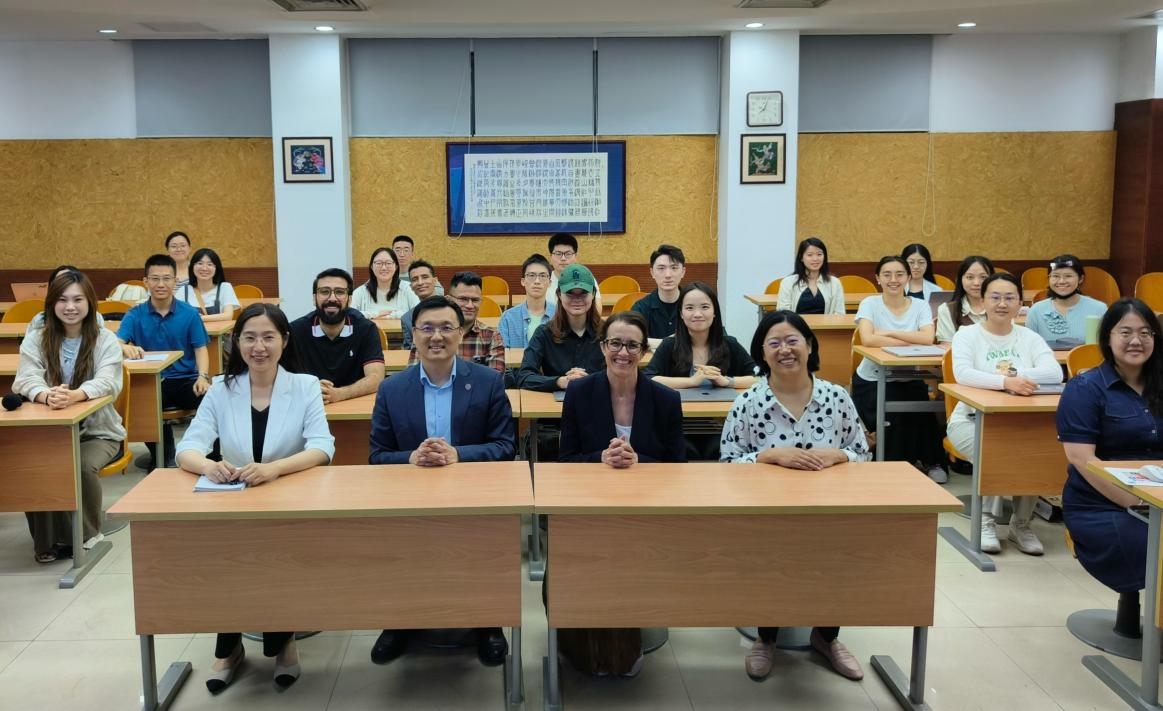
Group Picture of Participants